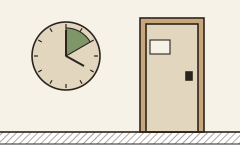
Sixty seconds, five checks: door (closed, protocol active, predictable machines off), devices (the right mic and output selected by name, not by luck), distance (mic at a hand-span, gain sane), loop (one voice-memo sentence played back — the only honest test), mute (joining muted, shortcut thumb-ready). Run it before the calls that matter; make it reflex for the rest.
1. The sweep, in order
- 0:00–0:10 — Door & room: door shut, sign up, dishwasher/washing machine not mid-cycle, window on the quiet side.
- 0:10–0:20 — Devices: the app's audio settings show your actual mic and output by name; Bluetooth didn't substitute overnight.
- 0:20–0:35 — Distance & gain: mic a hand-span away, angled across; input level peaking healthy, not hot.
- 0:35–0:50 — The loop: record one sentence in a voice memo, play it back — distance, echo and crackle all confess here.
- 0:50–0:60 — Mute state: join muted; unmute shortcut or button located before you need it.
2. Keep the kit staged
- Headset lives on the same hook; cables stay routed; the boom arm returns to position after cleaning day.
- Spare wired earbuds in the drawer for the day Bluetooth chooses chaos.
- Once a week, run the loop test even without a big call — drift is silent.
Checklist green, room still loud?
Past a point, another foam panel buys nothing — the remaining noise is unpredictable life, which is what ML filters eat. Krisp, 7 days full-featured, no card: find out if what your room still lets through is a software problem.
Test what the room leaves Software vs room treatment — the full picture →3. Escalate deliberately for the big ones
- High-stakes call? Run the sweep at ten minutes out, not one — fixing takes minutes only when they exist.
- Warn the household, quiet-hour the machines, close the far door too.
- Have the fallback decided in advance: phone + earbuds, hotspot, the works.
Still stuck?
- Loop test sounds roomy? Mic distance first, then the echo guide.
- Devices keep resetting? Name them explicitly in each app; distrust 'system default'.
- Checklist fatigue? Automate the stable parts (staged kit) and keep only the loop + mute as ritual.
Quick answers
Why a voice memo instead of the app's meter?
Meters prove signal exists; playback proves how you sound — distance, echo and crackle only reveal themselves to ears. Thirty seconds of listening beats any dancing bar.
Is joining muted really necessary at home?
It's free insurance: chair scrapes, last words to the household, the cough — none broadcast. Unmuting deliberately costs one tap.